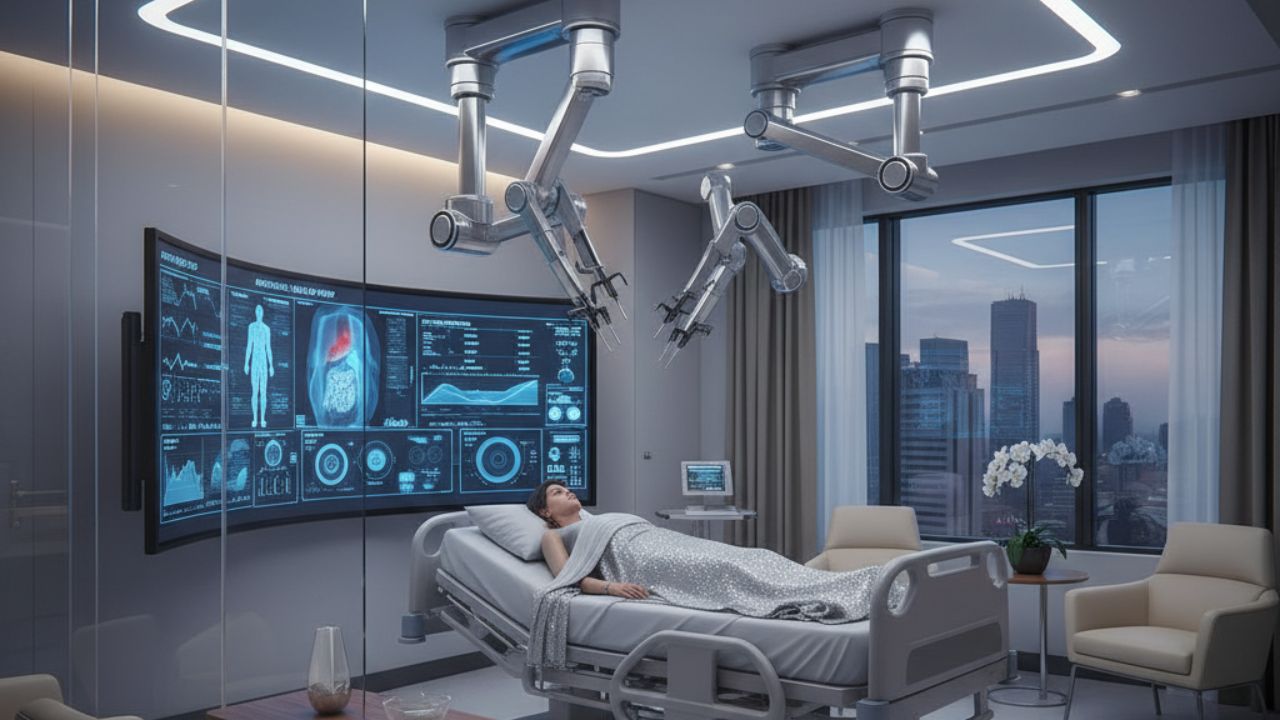
American healthcare sits at a crossroads. On one side, medical institutions push the boundaries of what’s possible—mapping genomes, performing robotic surgeries with millimeter precision, and deploying imaging technology that can detect tumors smaller than a grain of rice. On the other, patients face bills that can rival the cost of a home.
This isn’t about routine check-ups or broken bones. The hospitals featured here represent the upper echelon of specialized medicine, where innovation meets expense. They’re equipped with technology found nowhere else, staffed by physicians who’ve spent decades mastering their craft, and trusted by patients who travel thousands of miles seeking treatments unavailable in their home countries.
Understanding what drives these costs—and what patients receive in return—requires looking beyond the price tags. From Mayo Clinic’s personalized medicine protocols to Cedars-Sinai’s five-star patient accommodations, each institution has carved out a distinct niche. Some excel in cardiac care, others in neurosurgery or cancer treatment. What they share is a commitment to deploying the most advanced medical interventions available, regardless of expense.
The following breakdown examines five hospitals where exceptional care commands exceptional prices. We’ll explore how they earned their reputations, what technologies set them apart, and why patients continue choosing them despite the financial burden.
How We Selected These Hospitals
Not every expensive hospital delivers value proportional to its cost. Our selection criteria focused on three key factors:
Specialized care capabilities: We prioritized institutions offering treatments unavailable at most hospitals—experimental cancer therapies, complex organ transplants, or minimally invasive procedures requiring rare expertise.
Advanced medical equipment: The hospitals listed here operate technology that represents the cutting edge of medical innovation. Think proton beam therapy systems costing $150 million or surgical robots updated annually to incorporate the latest advancements.
Patient cost burden: We examined both insurance negotiated rates and out-of-pocket expenses for common specialized procedures. These figures reflect what patients actually pay, not just sticker prices.
Each hospital below excels across all three dimensions, though they’ve achieved prominence through different specialties.
Mayo Clinic (Rochester, Minnesota)
Mayo Clinic pioneered the concept of collaborative medicine over a century ago. Today, that philosophy manifests in treatment plans crafted by teams of specialists rather than individual physicians. A single cancer patient might have their case reviewed by oncologists, radiologists, surgeons, and geneticists before treatment begins.
The clinic has invested heavily in personalized medicine, using genetic testing to tailor treatments to individual patients. Their Center for Individualized Medicine processes thousands of genomic tests annually, identifying mutations that might respond to targeted therapies. For certain rare cancers, this approach has doubled survival rates compared to standard protocols.
Research integration sets Mayo apart from competitors. Clinical trials run throughout the facility, giving patients access to experimental treatments years before FDA approval. The institution publishes more peer-reviewed studies than any other hospital system, with findings that frequently reshape treatment standards worldwide.
Costs reflect this comprehensive approach. A complex cancer treatment plan averaging six months can exceed $500,000 when combining surgery, targeted therapy, and ongoing monitoring. Cardiac procedures requiring multi-week stays often surpass $300,000. Even with insurance, patients routinely face five-figure out-of-pocket expenses.
Cleveland Clinic (Cleveland, Ohio)
If you need heart surgery, Cleveland Clinic has been the gold standard for decades. U.S. News & World Report has ranked it the nation’s top cardiac care program for 28 consecutive years—a streak no other hospital has matched in any specialty.
The clinic performs more than 6,000 cardiac surgeries annually, giving its surgeons expertise that comes only from repetition. They’ve pioneered techniques now used globally, including minimally invasive valve replacements that reduce recovery time from months to weeks.
Robotic surgery programs extend beyond cardiac care. The institution operates dozens of da Vinci surgical systems, robotic platforms that enable precision impossible with human hands alone. Surgeons perform everything from prostatectomies to colorectal procedures using these systems, often achieving better outcomes with fewer complications than traditional methods.
Transplant services represent another area of excellence. Cleveland Clinic conducts hundreds of organ transplants yearly, including complex cases that other hospitals decline. Their uterus transplant program—one of only two in North America—has enabled several women to carry pregnancies after being born without a uterus.
Premium care comes with premium pricing. Heart surgeries average $200,000 to $400,000 depending on complexity. Robotic procedures, while less invasive, still cost 20-30% more than conventional surgery due to equipment expenses. Transplant operations frequently exceed half a million dollars when factoring in pre-operative evaluation, surgery, and post-transplant monitoring.
Johns Hopkins Hospital (Baltimore, Maryland)
Johns Hopkins built its reputation on neurosurgery and maintains that dominance today. The hospital’s Department of Neurosurgery tackles cases other institutions consider inoperable—tumors wrapped around critical blood vessels, injuries affecting the brain stem, congenital malformations requiring reconstruction.
Dr. Ben Carson performed the first successful separation of conjoined twins joined at the head while at Johns Hopkins. That spirit of attempting the impossible continues. The hospital’s neurosurgeons regularly operate on regions of the brain most physicians won’t touch, accepting higher risk because the alternative is certain decline.
Oncology services rival their neurosurgical counterparts. The Sidney Kimmel Comprehensive Cancer Center holds National Cancer Institute designation, placing it among an elite group of 71 centers nationwide. They offer immunotherapy protocols available at fewer than a dozen hospitals, including CAR T-cell therapy that reprograms a patient’s immune system to attack cancer.
Proton beam therapy—a radiation treatment that targets tumors while sparing surrounding tissue—costs Johns Hopkins approximately $150 million to install and maintain. Only 37 centers in the United States offer it. For pediatric brain tumors, where protecting developing tissue is crucial, proton therapy can mean the difference between normal development and lifelong impairment.
Financial implications match the complexity of care. Brain surgeries often cost $250,000 to $500,000. Advanced cancer treatments combining surgery, proton therapy, and immunotherapy can exceed $750,000 over a year of treatment. Even diagnostic workups for complex neurological conditions frequently run into six figures.
Massachusetts General Hospital (Boston, Massachusetts)
Mass General operates one of the world’s most advanced imaging research centers. Their Martinos Center for Biomedical Imaging develops scanning technology years ahead of commercial availability. Patients gain access to experimental MRI sequences that can detect minute changes in tissue density, catching diseases at their earliest stages.
Clinical trial infrastructure gives patients options unavailable elsewhere. As a teaching hospital for Harvard Medical School, Mass General runs thousands of trials across virtually every medical specialty. Someone diagnosed with pancreatic cancer—typically a death sentence—might access experimental drugs that extend survival from months to years.
The hospital’s transplant institute performs over 400 organ transplants annually, including rare multi-organ procedures. They’ve successfully transplanted hearts, lungs, livers, and kidneys simultaneously in patients whose systems had catastrophically failed. Survival rates exceed national averages across all organ types.
Radiation oncology services employ technology found at fewer than 50 hospitals nationwide. Their MRI-guided radiation therapy system images tumors in real-time during treatment, adjusting radiation beams as the tumor moves with each breath. This precision allows higher radiation doses with reduced damage to healthy tissue.
Premium technology demands premium payment. Advanced imaging protocols can cost $10,000 to $30,000 for a single session. Participation in clinical trials sometimes reduces costs, though experimental treatments still average $100,000 to $300,000. Multi-organ transplants rank among medicine’s most expensive procedures, often exceeding $1 million when combining surgery, hospitalization, and first-year immunosuppression.
Cedars-Sinai Medical Center (Los Angeles, California)
Cedars-Sinai occupies a unique niche—world-class medicine delivered with hotel-level amenities. Private patient suites feature flat-screen televisions, designer furnishings, and meals prepared by gourmet chefs. For patients spending weeks or months hospitalized, environment matters.
The luxury setting shouldn’t obscure medical capabilities. Cedars-Sinai’s transplant program ranks among the nation’s largest, performing over 300 procedures annually. Their liver transplant survival rates exceed 90% at one year, topping national benchmarks. The hospital pioneered living-donor liver transplants, where a portion of a healthy person’s liver is transplanted, allowing both donor and recipient livers to regenerate.
Cardiac care leverages cutting-edge technology. The Smidt Heart Institute uses 3D printing to create patient-specific models of hearts before complex surgeries. Surgeons can practice on exact replicas, reducing operative time and complications. They’ve also developed artificial intelligence algorithms that predict heart failure weeks before symptoms appear, enabling early intervention.
Cancer services integrate traditional and experimental approaches. The Samuel Oschin Comprehensive Cancer Institute offers immunotherapy, targeted therapy, and traditional chemotherapy. Their precision medicine program sequences tumor DNA to identify specific mutations, then matches patients with drugs targeting those exact genetic changes.
Costs reflect both medical excellence and hospitality. Private suites add thousands of dollars to daily hospital charges. Transplant procedures range from $400,000 to over $1 million. Cancer treatments utilizing genetic sequencing and targeted therapy average $300,000 to $600,000 annually. Even with insurance, patients routinely face $50,000 to $100,000 in out-of-pocket costs.
Why Specialized Treatment Costs So Much
Medical innovation doesn’t come cheap. A single surgical robot costs between $1 million and $2.5 million, with annual maintenance fees approaching $200,000. Proton beam therapy systems require particle accelerators rivaling physics laboratories in complexity and cost. Advanced MRI machines capable of imaging at molecular resolution cost $3 million to $7 million each.
Specialist expertise commands premium compensation. A neurosurgeon with 20 years of experience performing complex brain surgeries might earn $800,000 to $1.2 million annually—wages justified by outcomes that less experienced surgeons can’t match. Hospitals invest millions training physicians, often sending them abroad to learn rare techniques.
Research and clinical trials represent hidden costs. Every experimental treatment requires years of testing before becoming standard care. Pharmaceutical companies spend billions developing drugs, costs ultimately passed to patients. Hospitals conducting trials must maintain specialized staff, equipment, and protocols—expenses that insurance doesn’t always cover.
Administrative overhead compounds direct medical costs. Billing departments employ teams negotiating with dozens of insurance companies, each with different coverage policies. Compliance with healthcare regulations requires legal staff, quality assurance personnel, and documentation systems. These operational costs can consume 25-30% of hospital revenue.
Medical malpractice insurance for high-risk specialties costs hundreds of thousands annually per physician. Hospitals self-insure or pay premiums reaching millions. Those costs get incorporated into procedure pricing, particularly for surgeries with higher complication risks.
Weighing Cost Against Breakthrough Care
These five hospitals represent American healthcare at its most advanced—and most expensive. They’ve pushed survival rates higher, recovery times shorter, and quality of life better for conditions that were death sentences a generation ago. Patients travel from around the world seeking treatments unavailable in their home countries.
Yet accessibility remains limited. Even with insurance, out-of-pocket costs can bankrupt families. Geographic barriers prevent many from accessing these centers. The innovations pioneered here may take a decade to reach community hospitals, if they arrive at all.
The tension between cost and capability won’t resolve soon. Medical technology will continue advancing, and those advances will command premium prices. Patients facing serious diagnoses must weigh financial devastation against the best possible outcomes. Sometimes the choice is clear. Often, it’s not.
For those fortunate enough to access care at these institutions, the combination of cutting-edge technology, specialized expertise, and comprehensive treatment offers the best chance of survival and recovery medicine can provide. Whether that justifies the cost is a question each patient—and society as a whole—must answer for themselves.